Ceiling Fan Installation Guide: Cost, Safety, and DIY vs. Pro Tips
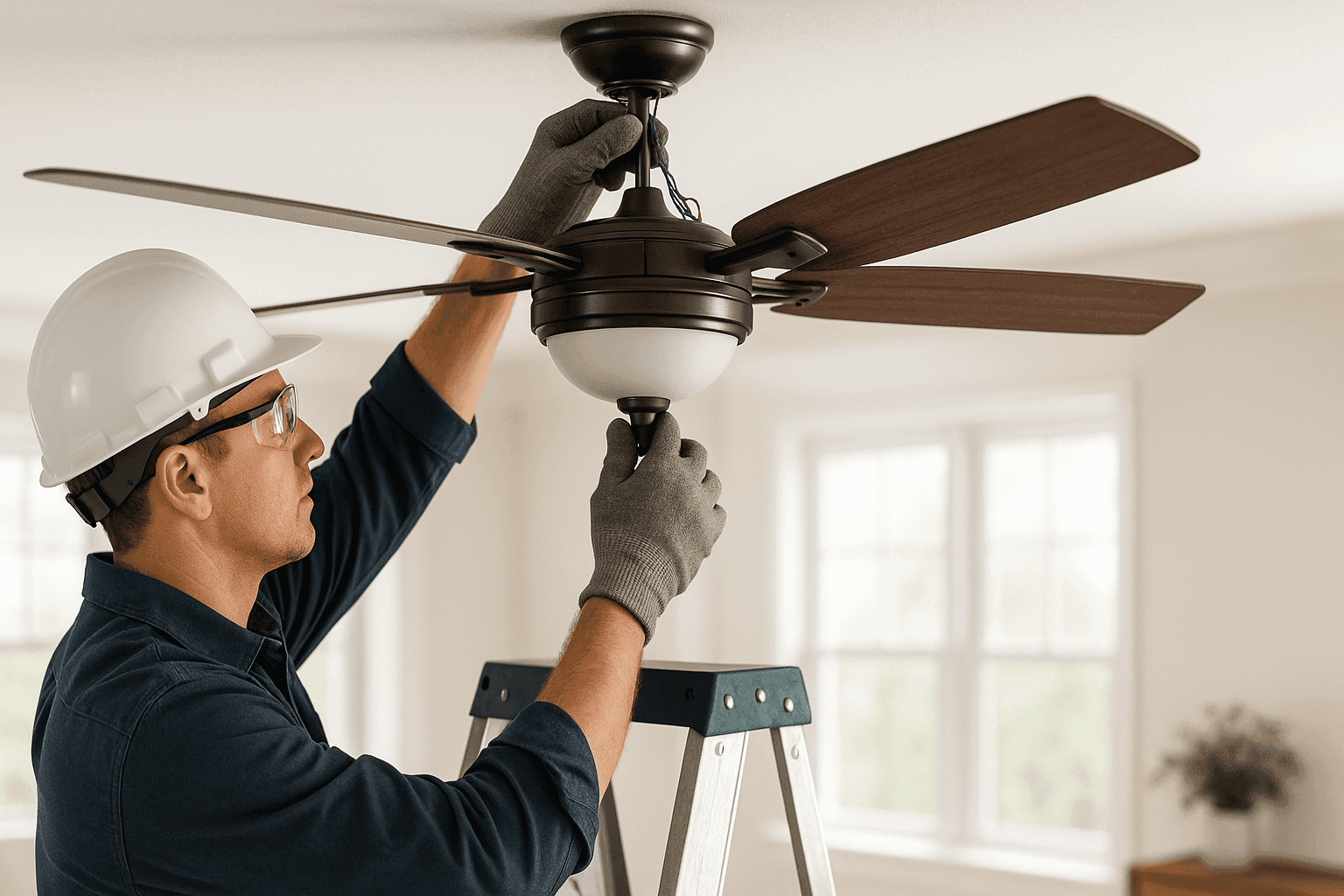
You want your rooms to feel cooler, your energy bill to drop, and your home to look sharp. A ceiling fan checks all those boxes. But wires, ladders, and spinning blades can turn a simple upgrade into a risky puzzle.
At Green Planet Electric, we see it all—wobbly fans, flickering lights, confused DIYers, and late-night emergency electrician calls. Here’s what you need to know before you start.
Why Ceiling Fan Installation Trips Up Homeowners
Installing a ceiling fan isn’t as simple as swapping a bulb. It’s more like following a treasure map: there are clues, rules, and traps along the way. Getting it wrong isn’t just a hassle—it can mean a wobbly fan, a fried circuit, or even a fire hazard.
Some fans need new wiring or a reinforced junction box. Others require working around old plaster or tight attic spaces. And if you miss a step, you could end up calling for help in the middle of the night.
Quick Safety Checklist Before You Start 🛑
- Turn off power at the breaker. Don’t trust just the wall switch.
- Test for live wires using a non-contact voltage tester.
- Check your electrical box. It must be rated to support ceiling fans (look for labels or metal construction).
- Read the manufacturer’s manual. Every fan has quirks.
- Keep a sturdy ladder—never balance on furniture.
- Wear safety goggles and gloves. Dust, debris, and sharp screws aren’t friendly.
- Never work alone on tall ceilings. Two sets of hands are safer than one.
If you’re ever unsure, pause. Electrical safety isn’t a race.
DIY vs. Call a Pro: Which Path Fits Your Home?
Some folks love a hands-on challenge. Others want peace of mind—and a fan that won’t rattle at midnight. Here’s how to decide:
DIY Makes Sense If:
- You’re comfortable with basic wiring.
- The existing electrical box is fan-rated and secure.
- Your ceiling is standard height and easy to reach.
- You have the right tools: drill, wire strippers, screwdrivers, voltage tester, and a balancing kit.
- You can lift the fan safely and install it with one or two people.
You Should Call a Pro If:
- Your home has old or aluminum wiring (common in houses built before 1972).
- The fan will replace a light fixture (most boxes aren’t strong enough).
- The ceiling is high, sloped, or hard to access.
- You want to add smart controls, speed switches, or remote features.
- You’re unsure about wiring diagrams or code requirements.
- You need help with balancing, troubleshooting, or connecting to Low Voltage Systems near you.
A professional brings the right tools, code knowledge, and experience—so your fan works safely from day one.
What Pros Do On Arrival
A certified electrician isn’t just a wire wrangler—they’re your safety net. Here’s how the process usually unfolds:
- Safety Check: Confirm circuit is off. Inspect wires, box, and structural integrity.
- Box Upgrade: Install or reinforce a fan-rated electrical box if needed.
- Wiring: Match connections by color and function (hot, neutral, ground). Verify with a tester.
- Mounting Bracket: Secure it so the fan won’t wobble or shake.
- Fan Assembly: Attach blades, light kits, and accessories according to the manual.
- Balancing: Use a balancing kit to prevent future wobbles.
- Testing: Power up, run through all speeds, check for noise, and confirm all controls work.
- Code Compliance: Make sure everything meets National Electrical Code (NEC) and local rules.
They’ll also spot bigger issues—like outdated wiring, hidden junctions, or overloaded circuits—and advise you before problems start.
Prevention & Maintenance
A little care keeps your fan smooth and quiet:
- Tighten screws and brackets every few months.
- Clean blades and housings to prevent dust buildup and imbalances.
- Check for odd noises—clicks, hums, or grinding can mean loose parts.
- Test remotes or wall controls regularly.
- Have wiring checked during annual electrical safety inspections.
If you spot wobbling or flickering lights, don’t ignore them. These are warning signs, not background music.
Costs & Time Factors: What Affects Your Bill?
Ceiling fan installation isn’t one-size-fits-all. Here’s what can affect the cost and time involved:
- Wiring upgrades: Older homes often need new circuits or boxes.
- Ceiling height: High, vaulted, or sloped ceilings require special mounts or extra labor.
- Fan size and weight: Heavier or larger fans need more support and careful balancing.
- Smart features: Wi-Fi, remote controls, or integration with home automation systems add complexity.
- Access: Tight spaces, beams, or finished ceilings slow things down.
- Permits: Some areas require inspection or approval for electrical work.
Most installations take one to three hours, but tricky setups can stretch longer.
When It’s an Emergency
Did you smell burning plastic? See sparks? Lose power to half your house after a fan install? That’s when you need an emergency electrician, day or night.
Common emergencies include:
- Fan box getting hot
- Circuit breaker tripping repeatedly
- Visible sparks or smoke
- Loss of power in multiple rooms
- Fans coming loose or falling
Electrical issues aren’t the place to “wait and see.” Safety comes first—always.
FAQ: Ceiling Fan Installation
My new fan wobbles. What should I do?
First, turn it off. Check that all screws and brackets are tight. Use a blade balancing kit (usually included). If wobble continues, the box or bracket may be loose—or the blades may be warped. Persistent wobble? Time to call an electrician.
The remote doesn’t work. Is it wired wrong?
Check the batteries and the dip switch settings on both the remote and receiver. Make sure wires are connected as shown in the manual. Still no luck? The receiver or wiring may be faulty.
Can I use my old light fixture’s box for a ceiling fan?
Usually not. Most light boxes aren’t rated for the weight and vibration of a fan. The National Electrical Code (NEC 314.27) requires a fan-rated box. Replacing it is often a job for a professional.
Why does my fan make a clicking noise?
This often means loose screws, blade brackets, or even a wire brushing against moving parts. Turn off the power, inspect carefully, and tighten everything. If you can’t find the cause, let an electrician take a look.
Local & Seasonal Considerations 🌦️
Ceiling fan use ramps up in summer—but here’s a tip: reversing the blades in winter helps circulate warm air from your heating system. In some regions, humidity, salt air, or temperature swings can affect wiring or fan motors. If you live in an older home or a high-moisture area, annual inspections are smart.
If you’re upgrading for energy savings, consider pairing your fan with LED lighting or smart home systems—ask about options for Low Voltage Systems near you.
Ready for a smoother, safer installation? Whether it’s a simple swap or a tangled old wiring job, Green Planet Electric is here 24/7. Don’t gamble with your home’s safety or comfort.
Call Green Planet Electric now — or reach us anytime at 877-753-8713 .