How to Protect Your Home from Electrical Surges Year-Round
Is your home ready for the next lightning storm? Or the sudden jolt when a big appliance kicks on? Electrical surges can strike any time, putting your electronics, safety, and peace of mind at risk.
At Green Planet Electric, we see the damage surges cause every day. That burnt smell when your favorite appliance won’t turn back on. Flickering lights after a storm. Or worse—a surprise trip to the breaker box in the dark. Let’s break down what you need to know to keep your home, and everything in it, safe from surges.
What Causes Electrical Surges?
Think of your home’s wiring like a network of city streets. Power—like cars—zips along, following the rules. But sometimes, a flood of traffic comes rushing in, overwhelming the flow. That’s an electrical surge: a sudden, powerful spike in voltage.
Common causes include:
- Lightning strikes: Even if they don’t hit your house directly, a nearby bolt can send a shockwave through your wiring.
- Utility grid switching: When your power company switches lines or restores power after an outage, voltage can spike.
- High-powered appliances: Big devices like air conditioners or pool pumps turning on and off can create mini-surges.
- Faulty wiring or overloaded circuits: Old or damaged wiring, especially in older homes, can make surges more likely.
Some surges last only microseconds. Others can trip breakers or destroy sensitive electronics outright.
Quick Safety Checklist ⚡
Before you worry, start here. Walk through your home and check:
- Are all major appliances plugged into grounded outlets?
- Do you use surge protectors for computers, TVs, and smart devices?
- Are your smoke and carbon monoxide detectors up to date?
- When was your last professional electrical safety inspection?
- Is your panel labeled and easy to access in an emergency?
- Do you notice frequent flickering, buzzing, or tripping breakers?
If you answer “no” or “not sure” to any of these, you’re at risk.
What Can Electrical Surges Damage?
Surges are like a shockwave through your home’s veins. The damage can be sneaky or sudden:
- Wrecked electronics: TVs, computers, gaming systems, and smart home gadgets are super sensitive to voltage spikes.
- Hidden harm: Surges can weaken wiring and outlets over time, setting the stage for future fires or failures.
- Appliance death: Refrigerators, washers, and even your oven’s digital controls can be fried in an instant.
- Safety systems: Smoke alarms, carbon monoxide detectors, and security systems can be disabled—often without warning.
The financial hit? It adds up fast. Insurance claims for surge damage can run into the thousands. But worse is the risk to your family’s safety.
Plug-In vs. Whole-Home Surge Protection
You’ve seen the power strips with “surge protection” at the store. They’re a good start. But it’s like putting a small umbrella over a big parade—some things will still get soaked.
Plug-In Surge Protectors
- Great for computers, TVs, routers, and game consoles.
- Easy to install—just plug in and go.
- They wear out quietly. Most don’t warn you when their protection is gone.
- Not enough for big surges from lightning or grid events.
Whole-Home Surge Protectors
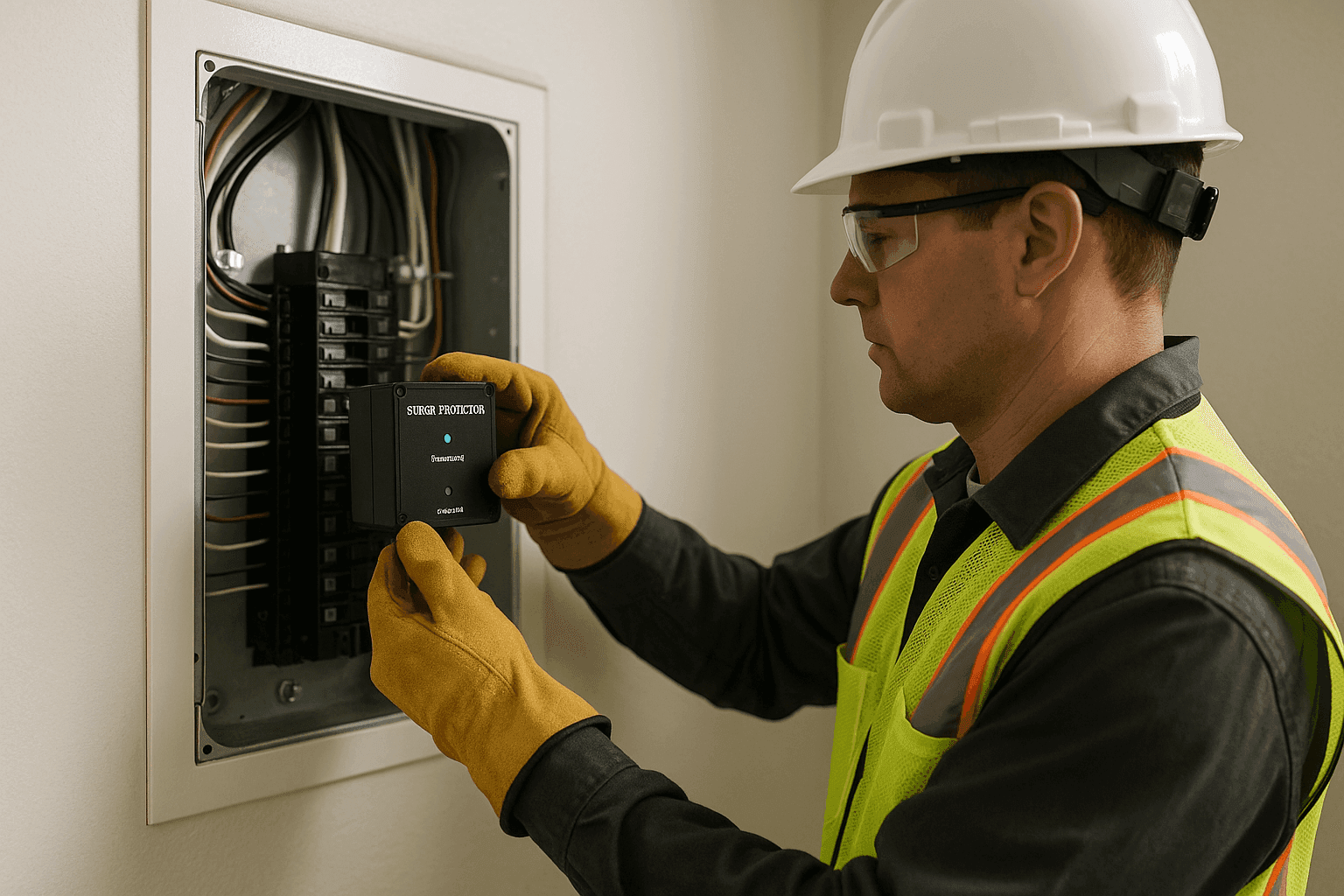
- Installed directly into your electrical panel by a licensed electrician.
- Shields every circuit in your home, not just what’s plugged in.
- Protects major appliances, HVAC systems, and all hardwired devices.
- Needs professional installation to meet National Electrical Code (NEC) standards.
- Regular maintenance checks are a must.
DIY vs. Call a Pro
Sure, you can buy a surge strip at the hardware store. But for real protection, especially for your whole house, it’s time to call an emergency electrician with experience in Low Voltage Systems near you.
DIY Surge Protection
- Plug-in strips for small electronics are fine.
- Never daisy-chain surge strips (plug one into another).
- Always check for UL certification.
- Replace strips every 3–5 years, or after a major surge.
When To Call The Pros
- Installing a whole-home surge protector.
- Upgrading your electrical panel or rewiring.
- Troubleshooting frequent breaker trips or outages.
- Adding new appliances or home automation systems.
Remember: Working inside your breaker panel is dangerous and can void your homeowner’s insurance if not done by a licensed professional.
What Pros Do On Arrival
When you call Green Planet Electric, here’s what happens:
- Assessment: We walk your home, checking for surge risks, outdated wiring, and overloaded circuits.
- Panel inspection: We open your main service panel and check for NEC compliance, proper grounding, and safe connections.
- Surge protection options: We recommend and install the right whole-home surge protector for your system and needs.
- Testing: Every installation is tested for proper operation—before we leave.
- Education: We’ll show you what to watch for and how to maintain your new protection.
We follow the latest NEC and NFPA 70E guidelines to keep your home safe.
Prevention & Maintenance 🛠️
Surge protection isn’t a “set it and forget it” deal. Stay protected year-round by:
- Scheduling annual electrical safety inspections.
- Testing and replacing plug-in surge strips regularly.
- Having a pro check your panel and whole-home surge device every 1–2 years.
- Upgrading wiring if your home is over 30 years old.
- Keeping outdoor wiring, pool & spa electrical, and EV chargers inspected for surge risk.
- Watching for warning signs: flickering lights, burning smells, or hot outlets.
The best defense is a layered approach: plug-in strips for gadgets, and a whole-home protector for everything else.
Costs & Time Factors
You might wonder, “How much does all this cost?” While prices vary by home size and needs, here’s what to expect:
- Plug-in surge strips: Usually affordable, but need regular replacement.
- Whole-home surge protectors: Installation can take 1–2 hours for most homes.
- Panel upgrades, rewiring, or other repairs: May require more time, especially in older homes or those with complex wiring.
- Annual inspections: Quick—often less than an hour, but priceless for peace of mind.
Professional surge protection is an investment. It can save thousands in damage and prevent future emergencies.
When It’s an Emergency
Storm rolling in? Power flickering? Here’s what to do:
- Unplug sensitive electronics if you suspect a surge is coming.
- If you smell burning or see smoke, shut off your main breaker and leave the house.
- Call an emergency electrician immediately if you lose power, lights flicker, or breakers keep tripping.
- Never touch wet panels or outlets after storm flooding—call for help.
Green Planet Electric responds 24/7. We’re ready for emergencies, no matter the hour.
FAQ
How do I know if my home needs surge protection?
If you have electronics, appliances, or live in an area with storms or frequent outages, you need it. Homes with older wiring are especially at risk.
Do surge protectors stop all surges?
No device is perfect. Plug-in strips handle minor surges. Whole-home protectors stop the big ones. Combined, they offer the best shield—but lightning can still overwhelm any system if it’s a direct hit.
How often should surge protection be checked?
Plug-in strips need checking every 3–5 years. Whole-home systems should be inspected by a professional yearly, or after major storms.
Will insurance cover surge damage?
Some policies include coverage, but many don’t. Check your policy and consider surge protection as your first defense.
Local & Seasonal Considerations 🌩️
Thunderstorm season isn’t the only threat. Here’s what to watch for year-round:
- Spring/Summer: More lightning, power grid switching during heat waves.
- Fall: Fallen branches or wildlife can cause outages and surges.
- Winter: Ice storms and outages mean sudden power returns—big surge risk.
- Rural areas: Longer power lines are more prone to surges.
- Urban homes: More electronics means more to protect.
No matter the season, electrical surges don’t keep a calendar. Proactive protection is always in season.
Ready to shield your home from electrical surges—day or night?
Call Green Planet Electric now — or reach us anytime at 877-753-8713 .